

Matrimonial disputes often contain complex webs of transactions that make forensic accounting tracing separate vs marital assets one of the most technically demanding aspects of divorce litigation. When spouses decide to part ways, accurately classifying property becomes crucial for ensuring a fair settlement. In many jurisdictions, marital property is subject to equitable distribution, while separate property typically remains with its original owner. However, over time, these assets may become commingled—such as when separate funds are deposited into joint accounts or when marital funds are used to maintain separate property.
As a forensic CPA and valuation expert, I’ve seen firsthand how failing to identify all assets during divorce can lead to inequitable settlements that disadvantage one spouse. Forensic accounting and divorce go hand-in-hand when financial clarity is needed. The marital balance sheet serves as the foundation for property division, but creating an accurate one requires specialized skills. Asset tracing divorce techniques help reveal the true nature of property, particularly in cases involving closely held businesses, complex compensation structures, or situations where one spouse has maintained financial control. In forensic accounting divorce cases, we play a key role in distilling thousands of transactions into clear narratives and exhibits that reveal the financial truth.
This article explores the expert methods forensic accountants use to trace and classify assets, the documentation required, common challenges, and how the results impact divorce settlements. Whether you’re an attorney handling a high-asset divorce or an individual navigating property division, understanding these techniques can help you achieve a more equitable outcome.
When Asset Tracing Becomes Critical in Divorce Litigation
Financial transparency forms the bedrock of equitable divorce settlements, yet it remains elusive in many cases. Asset tracing becomes essential in divorce litigation under specific circumstances where complex financial matters require detailed forensic analysis to ensure fair property division.
Hidden assets and financial control by one spouse
According to a survey for the National Endowment of Financial Education, have committed financial deception almost 40 percent of spouses[1]. This deception often manifests when one spouse exercises disproportionate control over finances, creating an environment where assets can be concealed or manipulated.
Spouses may employ various tactics to hide assets during divorce proceedings:
- Transferring funds to secret accounts or offshore holdings
- Creating fake debts or fabricated expenses to reduce net worth
- Moving assets to trusted friends or family members temporarily
- Undervaluing business interests or personal property
- Delaying income recognition until after divorce finalization
- Investing in cryptocurrency or other digital assets
Forensic accountants function as financial detectives, examining tax returns, bank statements, and lifestyle patterns to identify discrepancies. For example, if a spouse’s lifestyle exceeds their reported income, this often signals undisclosed assets [2]. Additionally, forensic experts analyze unusual spending patterns, hidden investments, or suspicious transactions that suggest funds have been transferred to undisclosed accounts [2].
, potentially awarding 100% of the hidden asset to the innocent spouse Courts take asset concealment seriously[3]. Furthermore, the concealing spouse may face contempt of court charges, financial sanctions, and even criminal prosecution for perjury or fraud [3].
Closely held businesses and complex compensation structures
Business ownership significantly complicates divorce cases because income can be deferred, disguised as expenses, or shifted to related entities [4]. A forensic accountant can uncover these strategies through business valuation and investigative analysis.
Consider this scenario: A business owner spouse might funnel money from a jointly owned business to a secret business they solely control [5]. Without forensic investigation, this diversion would remain undiscovered, leading to an unfair settlement.
Complex compensation structures present another challenge. Many high-net-worth individuals receive income through:
- Stock options that vest over time
- Deferred bonuses
- Business profits that fluctuate yearly
- Investment income from various sources [2]
These non-traditional income streams require specialized analysis to determine their true value and character. Forensic accountants review past earnings and financial patterns to separate one-time windfalls from steady income, ensuring fair support calculations [2].
Use of marital balance sheet in forensic accounting divorce cases
The marital balance sheet serves as the foundation for property division in divorce cases. Much like a business balance sheet, it displays all assets, liabilities, and equity related to the marital estate as of a specific date [5]. This comprehensive document determines the net worth of the marital estate and helps courts divide assets equitably.
Forensic accountants create this critical document by:
- Identifying and categorizing all assets and liabilities
- Determining accurate valuations for each item
- Distinguishing between separate and marital property
- Documenting the source and application of funds
The balance sheet includes real estate, bank accounts, investment portfolios, retirement accounts, business interests, vehicles, and other valuable assets. It also encompasses all liabilities such as mortgages, credit card balances, and personal loans [6].
Through asset tracing, forensic accountants help identify assets that might otherwise be overlooked or concealed, ensuring the marital balance sheet accurately reflects the couple’s complete financial picture [5]. Consequently, this document becomes essential for courts to distribute property fairly and develop appropriate support calculations.
Accepted Methods for Tracing Marital vs. Separate Assets
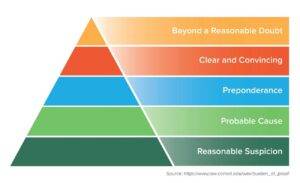
Image Source: Weaver
Tracing separate and marital assets demands meticulous forensic methodology and documentation. In my practice as a forensic CPA, I’ve found that courts typically recognize several established approaches, each suited to different circumstances in divorce proceedings.
Direct tracing with source-to-use documentation
Direct tracing represents the gold standard in forensic accounting and serves as the most straightforward method for establishing separate property claims. This approach follows assets from their origin through each transaction to their current form, creating an unbroken chain of documentation.
First, the forensic accountant identifies the separate property source—such as premarital funds, inheritances, or gifts—then meticulously traces every movement of those funds through financial records. For this method to succeed, clients must provide:
- Complete bank and brokerage statements
- Closing documents and title reports
- Gift documentation or inheritance records
- Tax returns and financial ledgers
To illustrate, when a spouse inherits $50,000 and uses it for a down payment on a marital home, direct tracing requires documentation showing the inheritance deposit, account statements proving the balance never dropped below the withdrawal amount, and proof the funds were used specifically for the home purchase.
Community-out-first and family expense tracing
When direct tracing becomes impossible due to commingled funds, forensic accountants often rely on the community-out-first rule (also called exhaustion method or family expense presumption). This approach assumes that community or marital funds are expended first before separate property is touched.
The legal principle, as established in Sibley v. Sibley, operates like a virtual accounting system—community funds “float” to the top of accounts while separate funds remain at the bottom. Subsequently, when withdrawals occur, they’re presumed to come from community funds until those are exhausted.
For instance, consider a joint account containing $10,000 in separate property and $20,000 in marital funds. If $22,500 is withdrawn for family expenses, the remaining $7,500 would be deemed separate property under this method. This approach proves especially valuable when records are incomplete or commingling has occurred over extended periods.
Use of hybrid or layered tracing models
Given the complexity of modern finances, forensic accountants frequently employ specialized hybrid models tailored to specific scenarios:
The Pro-Rata Method applies when separate funds are deposited into a marital account. From that point forward, any withdrawals or appreciation are allocated proportionally between separate and marital property based on their respective percentages at the time.
Moreover, the Minimum Sum Balance Method preserves separate property to the extent that an asset’s balance never drops below the separate property threshold. Unlike community-out-first, this method doesn’t assume separate property is depleted last.
Finally, the Clearinghouse Method addresses temporary deposits of separate funds into marital accounts. It allows tracing of separate property that briefly passes through commingled accounts when withdrawals of similar amounts occur within a reasonable timeframe.
Ultimately, the appropriate method depends on available documentation, jurisdiction rules, and specific case facts. Experienced forensic accountants typically layer multiple approaches to create compelling, court-ready analyzes that withstand scrutiny from opposing experts.
Key Documents Forensic Accountants Rely On
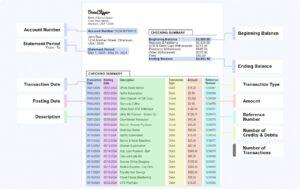
Image Source: DocuClipper
The foundation of effective asset tracing rests upon documentation that tells the financial story. In my practice as a forensic CPA, I’ve found that thorough documentation forms the bedrock of successful separate versus marital property claims.
Bank and brokerage statements
Bank and brokerage statements serve as the primary financial timeline in divorce cases. These documents provide a comprehensive record of deposits, withdrawals, transfers, and investment activity that proves essential for tracing funds from source to use. Forensic accountants meticulously analyze these statements to identify patterns, anomalies, and transaction histories.
Complete bank records typically include monthly statements, canceled checks, wire transfer instructions, and deposit slips from checking, savings, money market accounts, and certificates of deposit going back several years. We examine these documents for unexpected withdrawals, transfers, or unusual spending patterns that might indicate hidden funds.
Similarly, brokerage statements detail investment transactions, asset holdings, dividend income, and account values over time. These statements often reveal significant wealth that may be overlooked in standard financial disclosures and provide critical information about the timing of investments relative to the marriage.
Tax returns and W-2s
Tax documents represent some of the most critical paperwork in ensuring equitable settlements. Tax returns provide a comprehensive overview of a household’s financial situation that few other documents can match. They reveal all sources of income, business interests and their performance, investment holdings, patterns of deductions that may indicate hidden assets, and retirement contributions.
When examining tax returns, forensic accountants typically focus on:
- Schedule B (interest and dividends) to identify undisclosed accounts
- Schedule C (business income) to analyze self-employment activity
- Schedule D (capital gains and losses) to trace investment transactions
- Schedule E (rental properties and partnerships) to uncover additional income sources
W-2 forms and 1099s provide verification of reported income and often reveal bonuses, commissions, and other variable compensation that may be underreported elsewhere.
Business financials and general ledgers
For cases involving business ownership, corporate financial records become indispensable. These include profit and loss statements, balance sheets, cash flow statements, and general ledgers that track every transaction processed by the company.
General ledgers deserve particular scrutiny as they contain detailed records of all financial activities, including potentially suspicious transactions like loans to shareholders, unusual expense reimbursements, or payments to unknown vendors that might disguise distributions to owners.
Payroll records and business tax filings, including K-1 forms from partnerships, S-corporations, or LLCs, often reveal income streams not fully disclosed in personal financial statements.
Property deeds and mortgage records
Real estate often represents a significant portion of marital assets, making property records crucial for accurate asset classification. Deed records establish ownership timelines, purchase prices, and title structure (joint tenancy, tenancy by entirety, etc.).
Mortgage applications and closing statements frequently contain detailed financial disclosures made under penalty of perjury that can be compared with other representations. Property tax assessments and appraisal reports help establish value fluctuations throughout the marriage.
Beyond primary residences, thorough searches for undisclosed real estate holdings across multiple jurisdictions sometimes reveal separate properties purchased with diverted marital funds.
Common Pitfalls and Rebuttal Strategies in Tracing Analysis
Throughout my career as a forensic CPA, I’ve observed several recurring problems that undermine tracing analyzes in divorce cases. Understanding these pitfalls—and how to address them—can mean the difference between successful asset recovery and significant financial loss.
Failure to maintain separate accounts
One of the most damaging mistakes occurs when spouses fail to keep separate property isolated from marital funds. In California, placing both names on an account creates a presumption it’s community property, regardless of the source of funds. This legal presumption applies even if you used separate funds to pay for it.
Furthermore, transmutation occurs when the legal character of property changes from separate to community. California law requires any such change be made in writing and signed by the spouse giving up their rights. Tracing cannot undo a valid transmutation.
Inconsistent or missing documentation
Thorough record-keeping forms the foundation of successful tracing claims. Yet documentation problems frequently arise when bank statements, tax returns, or property records are incomplete or unavailable.
Notably, a forensic CPA cannot trace what doesn’t exist. Solid records often determine whether you keep what’s rightfully yours or lose it in division. As one court ruling demonstrated, even oral testimony may be insufficient to support reimbursement claims without accompanying written evidence.
How opposing experts may challenge tracing assumptions
Opposing experts typically attack tracing analyzes through rebuttal reports that identify deficiencies or unaddressed questions. They may challenge assumption validity, question record completeness, or highlight methodology flaws.
Effective rebuttal strategies often exploit commingling issues, point to gaps in historical records, or question the application of tracing methods. A strong rebuttal report brings up questions that either change or completely refute the original expert’s conclusions.
Six Common Questions About Asset Tracing in Divorce
In my forensic accounting practice, clients often ask critical questions about asset tracing during divorce proceedings. Understanding these fundamentals helps both attorneys and their clients navigate this complex process effectively.
What is the difference between marital and separate property?
Separate property typically includes assets owned before marriage, inheritances, and gifts received during marriage. Marital property generally encompasses anything acquired during the marriage, regardless of whose name appears on the title. Indeed, the distinction matters greatly since separate property usually remains with its original owner, while marital assets are subject to division.
Can separate property become marital over time?
Yes, through commingling (mixing separate and marital assets) or transmutation (changing property character). For instance, depositing an inheritance into a joint account often transforms it into marital property. In fact, using separate funds for marital expenses or improvements to marital property can likewise convert those funds into joint assets.
What if records are missing or incomplete?
Documentation is essential for successful tracing claims. Without sufficient records, courts typically apply the presumption that property is marital. In Texas, for example, the burden of proof falls on the spouse claiming separate property, requiring clear and convincing evidence beyond testimony alone.
How do courts treat income from separate assets?
Income generated from separate property may be classified as either separate or marital, depending on jurisdictional rules and spousal effort involved. Nevertheless, in many states, appreciation directly tied to active efforts during marriage is often considered marital property.
What is the role of a forensic accountant in divorce?
Forensic accountants document and verify financial transactions, support separate property claims, identify undisclosed assets, and analyze commingling issues. They review bank statements, tax returns, business records, and other financial documents to prepare comprehensive, meaningful analyzes for settlement negotiations or litigation.
How long does a tracing analysis usually take?
Thorough tracing analysis typically requires 3-6 months, given the extensive documentation needed and the meticulous nature of the work. Last-minute rush projects are rarely feasible due to the complexity involved.
Conclusion
Asset tracing represents one of the most technically demanding aspects of divorce litigation. Throughout my years as a forensic CPA, I have witnessed how thorough financial investigation directly impacts equitable property division outcomes. Certainly, the methods outlined above—direct tracing, community-out-first, and hybrid approaches—provide powerful tools for uncovering the true nature of assets when properly applied with complete documentation.
Nevertheless, the success of any tracing analysis ultimately depends on meticulous record-keeping and expert application of forensic techniques. Spouses who maintain separate accounts for inherited or pre-marital assets significantly strengthen their position in property division proceedings. Additionally, those who preserve complete financial records from the beginning of their marriage through dissolution gain substantial advantages when asserting separate property claims.
Forensic accountants play a crucial role in translating complex financial histories into clear, compelling narratives that courts can understand. We analyze thousands of transactions, identify patterns, and develop comprehensive exhibits that tell the financial story of a marriage. Furthermore, we provide the expert testimony needed to substantiate separate property claims that might otherwise be lost through commingling or transmutation.
The difference between successful and unsuccessful asset tracing often comes down to timing and preparation. Cases where financial documentation is gathered early and systematically typically yield more favorable outcomes than those where records must be reconstructed after the fact. Therefore, clients contemplating divorce should begin organizing their financial records before filing, particularly for high-value separate assets they wish to protect.
Asset tracing requires specialized expertise due to its technical complexity. The application of inappropriate tracing methods or misinterpretation of financial records can result in flawed conclusions that courts may reject. Consequently, selecting a qualified forensic accountant with specific experience in matrimonial disputes provides crucial protection against these potential pitfalls.
As divorce proceedings become increasingly complex, particularly among high-net-worth couples with diverse asset portfolios, forensic accounting has become an essential component of effective representation. The investment in professional tracing analysis frequently pays dividends by preserving separate property claims that might otherwise be forfeited through commingling or inadequate documentation. Thus, when significant assets are at stake, thorough forensic investigation provides the foundation for equitable divorce settlements that accurately reflect each spouse’s legitimate financial interests.
FAQs
Q1. What is the difference between marital and separate property in divorce? Marital property generally includes assets acquired during the marriage, regardless of whose name is on the title. Separate property typically consists of assets owned before marriage, inheritances, and gifts received during marriage. This distinction is crucial as separate property usually remains with its original owner, while marital assets are subject to division.
Q2. How can a forensic accountant help in uncovering hidden assets during divorce? Forensic accountants analyze financial records such as bank statements, tax returns, business documents, and property records to identify undisclosed assets. They look for discrepancies, unusual transactions, and spending patterns that may indicate hidden funds. Their expertise helps in tracing the flow of money and uncovering assets that might otherwise be overlooked.
Q3. What are some common methods used for tracing separate vs. marital assets? Common tracing methods include direct tracing with source-to-use documentation, the community-out-first approach, and hybrid models. Direct tracing follows assets from their origin through each transaction. The community-out-first method assumes marital funds are spent before separate property. Hybrid models, like the pro-rata or minimum sum balance methods, are used in more complex scenarios.
Q4. Can separate property become marital property over time? Yes, separate property can become marital property through commingling (mixing separate and marital assets) or transmutation (changing the property’s character). For example, depositing an inheritance into a joint account or using separate funds for marital expenses can potentially convert those assets into joint property.
Q5. How long does a typical asset tracing analysis take in a divorce case? A thorough asset tracing analysis usually requires 3-6 months to complete. This timeline accounts for the extensive documentation needed and the meticulous nature of the work involved. The complexity of the financial situation and the availability of records can impact the duration of the analysis.