
Forensic accounting services can make the difference between winning and losing high-stakes financial disputes. Organizations and attorneys depend on forensic accountants to deliver precise financial analysis that reveals hidden risks and creates a clear path forward. My experience as a forensic CPA shows how detailed due diligence helps restructure deals and minimize risk exposure for clients who face complex financial challenges.
Forensic accounting support goes beyond the numbers. A forensic accounting litigation specialist provides expert testimony, develops case strategies, and investigates fraud that stems from financial misconduct, theft, and contract disputes. These services support both criminal and civil recovery proceedings and help with disclosures to regulators and enforcement agencies. Our team analyzes complex financial data, finds hidden assets, spots fraud patterns, and delivers clear, compelling testimony that builds a stronger legal position.
Joey Friedman, CPA, ABV, M.Acc, MIB, serves as a forensic CPA and valuation expert who helps attorneys and businesses resolve disputes, calculate economic damages, and provide expert testimony, along with other financial litigation matters. This piece will show you the significant role of forensic accounting in litigation, the quickest ways experts use to analyze data, the required documentation, and how to avoid common pitfalls in financial disputes.
When Forensic Accounting Services Are Used in Litigation

Image Source: Blue Ocean Global Technologyf
Forensic accountants work as financial detectives in litigation and can make or break a case with their findings. Their specialized skills are a great way to get insights in disputes of all types. They help both parties get the financial clarity needed to resolve complex matters.
and business divorcesShareholder disputes
Business partners or shareholders sometimes reach a deadlock, and that’s when forensic accounting becomes vital. Shareholder disputes usually start from conflicts about profit sharing, management decisions, financial mismanagement, share valuation, or minority shareholder rights [1]. Forensic accountants break down financial discrepancies that might point to fraud or intentional manipulation.
These accountants provide unbiased analysis of financial records to find out if anyone has misused funds or business assets [1]. They get into expense patterns, look at vendor relationships, and study revenue timing to spot transactions that benefit controlling shareholders instead of the business [2]. By tracking money flows and spotting irregularities, they create the financial roadmap needed to resolve ownership conflicts.
High-asset divorce and equitable distribution
Divorces with substantial assets need specialized financial expertise. Forensic accountants are vital in . They find hidden assets, clarify asset types (marital, separate, or hybrid), and show when assets are “earned” to divide them fairly high-asset divorces[3].
Financial investigations in divorce cases aim to find hidden wealth, value business interests, and separate individual from shared property. These accountants study tax returns, bank statements, business ledgers, and credit card records to spot signs of hidden wealth [3]. This helps ensure both parties get their fair share based on complete financial disclosure.
Breach of contract and lost profits claims
Contract disputes often depend on accurate damage calculations. Forensic accountants measure lost profits in breach of contract cases using “but-for” scenarios. They estimate how the business would have performed without the breach [4]. They compare actual results against expected financial outcomes under normal conditions [5].
These experts study contracts to understand key terms (length, renewal rights), identify business drivers, and build models showing the plaintiff’s potential performance without the breach [6]. Lost profits usually equal lost revenue minus costs saved by not making those sales [5]. Courts want damage experts to use solid methods and data, not guesswork, to prove losses with “reasonable certainty” [4].
Employment and compensation disputes
Workplace conflicts that end up in court need forensic accountants to clarify wage and benefit issues. They figure out economic damages in wrongful termination cases by studying compensation and using economic data [7]. They also assess non-compete agreement breaches by looking at the employee’s value to the company and related costs.
These professionals help with wage discrimination studies through their knowledge of statistics and industry compensation structures [7]. Their work helps determine fair pay, lost wages, and proper solutions in employment disputes.
Insurance claims and business interruption
Business disruptions from disasters, accidents, or other events often lead to complex insurance claims. Forensic accountants study loss estimates, find event-related financial effects, calculate extra costs, and review reported values [8].
For business interruption cases, they measure economic damages by looking at financial records before, during, and after the loss [9]. They study the company’s history, talk to the core team, analyze industry data, and compare scenarios to determine what would have happened without the interruption [8]h. This work is especially valuable when measuring major claim costs like personal injury expenses and business losses [10].
Key Forensic Accounting Methods in Dispute Resolution
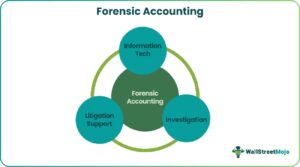
Image Source: WallStreetMojo
Forensic litigation experts use specialized methods to piece together financial facts and figure out damages in complex disputes. These techniques help courts grasp complex financial matters through solid analysis that can stand up to scrutiny.
Lost profits analysis using ‘but-for’ scenarios
The basic idea behind calculating damages is to make things right by figuring out what would have happened if nothing went wrong. The “but-for” scenario acts like a control group in this financial experiment [11]. This method looks at the revenue and profits a company would have made without the damaging event and compares them to what actually happened [12].
My process to build a “but-for” scenario includes models that look at:
- Revenue and sales analysis with proper market share adjustments
- Cost structure breakdown showing fixed versus variable costs
- Operational capacity details
- External market and economic factors [12]
Real evidence must back up “but-for” analyzes. To cite an instance, if a company managed to keep , past profit trends might give us the best picture of future performance 5% annual growth[13]. This gets tricky in cases with medical conditions, changing economic conditions, or risky new business ventures [11].
Business valuation under fair market value standard
Fair market value (FMV) means “the amount at which property would change hands between a willing buyer and willing seller, neither being under compulsion to buy or sell, both having reasonable knowledge of relevant facts” [14]. This standard is vital in shareholder disputes, divorce cases, and various litigation settings.
FMV comes with specific conditions: the highest price you can get, willing and informed parties, deals without special motivations, and enough knowledge [14]. It assumes current economic conditions, enough time to market, negotiated terms, and cash or similar payment [14].
Business values sometimes go beyond FMV because of unwilling partners, forced sales, lack of knowledge, creative financing, or buyer advantages [14]. In spite of that, understanding these differences is vital to present accurate valuations in court.
and commingling analysisAsset tracing
Asset tracing follows money through financial transactions to find misused assets [15]. This gets complicated when tainted (illegally obtained) and untainted (lawfully obtained) assets mix in accounts [1].
Forensic accountants work with four main tracing methods:
- First-In, First-Out (FIFO) – oldest assets leave first
- Last-In, First-Out (LIFO) – newest assets leave first
- Lowest Intermediate Balance Rule (LIBR) – tainted assets are spent last
- Pro Rata Distribution – splits withdrawals between mixed funds [1]
The choice of method changes findings by a lot, with LIBR usually showing the most tainted assets left [1]. Courts accept these methods, knowing that perfect tracing isn’t possible since cash is interchangeable [2].
Reasonable compensation analysis in employment cases
Reasonable compensation analysis checks if shareholder or executive pay is legitimate payment for work or hidden dividends [16]. This matters most for S corporations, where the IRS might relabel distributions as wages that need employment taxes [17].
Courts look at several factors to determine reasonable compensation. These include employee’s skills, job scope, business size and complexity, income ratios, common economic conditions, and similar job pay [16]. For closely held corporations, they also look at past compensation and personal guarantees of company debts [16].
Damage quantification in IP infringement
IP infringement cases need special damage calculations. When someone violates IP rights, the person making the claim usually picks between two options: damages inquiry (lost profits) or account of profits (what the defendant gained) [18].
Lost profits calculations show what extra profit the plaintiff would have earned without the infringement [18]. Another option is reasonable royalty – the payment that would have been agreed upon if the parties had made a license deal [18]. Both ways need careful economic analysis to prove damages clearly, since weak calculations can get a claim thrown out [19].
What Documents and Data Are Needed for Analysis

Image Source: Savage Accountancy
Financial investigators rely on detailed document analysis to uncover the truth. Each case needs different paperwork, but some basic materials are vital whatever the case type.
Tax returns and financial statements
Tax returns are a rich source of information for forensic accountants. They often start their search for income and assets here [20]. These documents are valuable because people usually file accurate returns to claim deductions and avoid tax evasion charges [21]. Tax returns can reveal through:hidden income sources
- Wage income that points to hidden business interests
- W-2 entries that show unknown retirement plans
- Real property taxes that reveal hidden assets [21]
Financial statements are the foundations of accurate financial reporting. Both internal documents (profit/loss statements, balance sheets) and external materials (tax returns, W-2s, 1099s) help spot trends and unusual patterns [22].
Bank records and general ledgers
Bank records tell the real story of an entity’s financial history through its transactions [23]. Forensic accountants look at bank statements, canceled checks, and deposit slips to follow money trails and find discrepancies [24]. One expert puts it this way: “Accounting records can be faked. But bank statements and canceled checks? They show where the money really went” [24].
General ledgers can tell stories of fraud, manipulation, and betrayal [25]. Auditors use electronic analysis to spot fraud patterns in these ledgers [25]. A properly analyzed general ledger might expose:
- Reclassifications from expense accounts to asset accounts (often showing attempts to fraudulently increase earnings)
- Wire payments booked to unusual expense accounts (possibly money stolen from the company)
- Clearing accounts with large transactions offset by both asset and expense items [25]
Sales reports and customer contracts
Sales documents provide key evidence in revenue investigations. Website analytics, production schedules, inventory records, contracts, invoices, shipping documents, and payment processing data show both sales activity and market demand [26].
Construction litigation uses pay applications, continuation sheets, change orders, budgets, invoices, and schedules to prove performance issues, cost shifting, overbilling, and related-party transactions [26]. IP litigation damages analysis benefits from product unit data, licensing reports, contracts, and customer usage records [26].
Payroll records and HR files
Payroll documents help calculate labor costs and workforce management [27]. A full rebuild of detailed payroll data often reveals fraud. One case showed how employees changed deductions and withholdings in the payroll system to steal over $1.30 million[28].
Organizations should keep separate HR files for:
- Medical information (health insurance benefits, wellness programs, FMLA leave applications)
- Employment forms (which may contain birth dates or social security numbers)
- Equal Employment Opportunity records
- Payroll information (W2 forms, timesheets, wage garnishments)
- I-9 documents [29]
Insurance policies and claim documentation
Insurance claim analysts combine past data, current conditions, and future predictions to figure out economic damage [10]. Key documents include:
- Bank statements/reconciliations
- Copies of canceled checks (preferably originals)
- Details of deposits and wire/ACH transfers
- General ledger and profit/loss statements
- Police reports (if applicable) [3]
Business interruption claims require accountants to review these records and determine what would have happened without the disruption [10].
Common Pitfalls and How Experts Rebut Weak Claims

Image Source: Blue Ocean Global Technology
Financial disputes depend heavily on reliable damage calculations, but expert testimony can fall short due to several common mistakes. Professional forensic accountants watch for these weaknesses through careful analysis.
Overstated damages due to flawed assumptions
Wrong cash-flow calculations or selective data can change damages by six figures[30]. Revenue projections often fail to match operational realities. Capital expenditures look smaller than depreciation, and experts assume negative working capital turns will last forever [31]. A full analysis reveals growth rates that exceed long-run nominal GDP or apply growth to EBITDA without factoring in reinvestment needs.
Failure to isolate non-operating income
Companies must exclude non-operating income—gains from sources outside normal business activities—when measuring performance[32]. Some businesses hide poor operating profit behind inflated non-operating income [33]. Forensic accountants look closely at sudden earnings spikes between periods, which often result from non-recurring gains wrongly added to damage calculations.
Improper use of industry measures
Industry measures often rely on questionable data sources where businesses tend to underreport their performance [34]. Data reliability issues aside, accounting interpretations vary widely among professionals. Taxable profit makes a poor measure of real profit for comparisons [34]. Businesses have countless unique elements that make such comparisons problematic.
Ignoring damage reduction
Damaged parties must try to reduce their losses [6]. Even if a party cannot generate offsetting profits, their damages should reflect potential profits they could have reasonably made [6]. Forensic accountants need to factor in saved expenses—materials, utilities, payroll—to avoid overstating damages [35].
Rebutting opposing expert’s unsupported conclusions
A strong rebuttal analyzes opposing reports line by line with proper citations [30]. Forensic accountants find calculation errors, inconsistent methods, and claims without support [36]. Common problems include missing links between lost profits and alleged actions, calculations based only on cash receipts, ignored capacity limits, and random interest rates [30].
Six Common Questions About Forensic Accounting in Litigation
Attorneys and business owners often ask me questions about forensic accounting in litigation. Their common concerns help them make better decisions throughout their cases.
When should a forensic accountant be hired in a case?
You should get a forensic accountant early if you can’t figure out liability or damages without understanding how allegations affect the economics. Many people wait too long to save on expert costs, but this backfires and leads to rushed analysis with poor results. Clear discussions about costs and scope work best right from the start. Regular check-ins help ensure expectations match reality. Working with lawyers who know how to handle experts helps manage costs better, especially when dealing with complex cases.
How are lost profits calculated in a business dispute?
Lost profits calculations follow a straightforward process. You estimate the lost gross revenue from the event and subtract any saved costs. Experts must nail down the correct loss period. This usually starts when the event happened and ends once business returns to normal or when a contract would have finished. Three main methods help calculate these losses:
- Before & After: Looking at profits before and after the damaging event
- Yardstick: Using similar businesses as a measuring stick
- Statistical Forecasting: Using predictive models to figure out losses
What’s the difference between a CPA and a forensic CPA?
Regular CPAs focus on taxes, audits, and financial compliance. Forensic CPAs combine accounting skills with detective work. They track funds, analyze financial data, write forensic reports, and testify in court. While many forensic accountants are CPAs, they need extra skills in catching fraud, investigating issues, and supporting litigation. This matters a lot in legal cases that need specialized financial analysis.
Can a forensic accountant testify in court?
Forensic accountants often serve as expert witnesses to help courts understand complex financial matters. They break down technical accounting concepts for judges and juries and provide fact-based analysis using solid accounting principles. Before taking the stand, they review case materials carefully and work with attorneys to match testimony with legal strategy. The best expert witnesses use analogies, visual aids, and clear explanations to make complex financial information easy to understand.
What if the opposing expert’s numbers are wrong?
Forensic accountants check opposing experts’ reports line by line to find calculation errors, method problems, and conclusions without support. Common mistakes include not connecting lost profits to claimed actions, missing capacity limits, and using random interest rates. A good rebuttal targets both the expert’s basic assumptions and final conclusions. This process often convinces courts to favor your expert’s view in disputes.
How long does a typical forensic analysis take?
Time needed changes based on scope, available documents, and case complexity. Standard investigations usually take 30-90 days if everyone cooperates with document requests. Business cases, multiple accounts, or hidden asset searches might take 4-6 months, especially if you need subpoenas. Quick projects like reviewing financial statements could wrap up in 2-4 weeks with ready documents. I give realistic timelines that account for possible delays in getting documents for court planning.
Conclusion
Forensic accounting stands as a vital tool in litigation. It serves as the financial foundation for disputes that range from shareholder conflicts to intellectual property infringement. This piece shows how specialized financial analysis builds stronger legal positions by finding hidden assets, measuring damages precisely, and giving testimony that appeals to judges and juries.
Success in financial investigations needs both technical skills and investigative instinct. The methods we covered – from “but-for” analysis to asset tracing – are the foundations of reliable expert testimony. Proper documentation plays a key role in building accurate financial stories that hold up under opposing scrutiny.
Financial analysis in litigation might look simple but holds many traps. Expert forensic accountants take great care to verify assumptions, isolate relevant income, apply industry standards, and consider mitigation efforts. Such attention to detail often determines whether claims succeed or get dismissed.
My experience as a forensic CPA has taught me the value of timing in these cases. Without doubt, bringing in forensic experts early allows for detailed analysis and better planning instead of rushed investigations. These experts know how to explain complex financial ideas in ways that judges and juries understand easily.
Financial disputes need expert help to reach resolution. A shareholder dispute, high-asset divorce, or complex business interruption claim needs specialized forensic accounting to bring financial clarity to litigation. The right forensic accountant brings more than just numbers – they give explanations that shape case strategy and help achieve better outcomes.
Your litigation case deserves individual-specific analysis from an experienced forensic accounting professional. Please reach out to Joey Friedman, CPA, PA to discuss your case confidentially. While this piece offers general educational information, your specific situation needs personal attention.
Key Takeaways
Forensic accounting serves as the financial backbone of litigation, providing the specialized expertise needed to uncover hidden assets, quantify damages, and deliver compelling expert testimony that can determine case outcomes.
- Early engagement is critical – Hire forensic accountants early in litigation to avoid rushed analysis and ensure comprehensive financial investigation that strengthens your legal position.
- “But-for” scenarios drive damage calculations – Lost profits analysis compares what would have happened without the damaging event to actual results, forming the foundation of credible damages claims.
- Documentation quality determines case strength – Tax returns, bank records, and financial statements provide the evidentiary foundation; incomplete records weaken expert testimony and damage calculations.
- Common pitfalls can destroy credibility – Overstated damages, flawed assumptions, and improper industry benchmarks frequently undermine expert testimony and must be avoided through rigorous analysis.
- Expert rebuttal requires methodical deconstruction – Challenging opposing experts involves line-by-line analysis to identify calculation errors, methodological flaws, and unsupported conclusions that courts can easily understand.
The difference between winning and losing financial disputes often comes down to the quality of forensic analysis and expert testimony, making specialized forensic accounting expertise essential for complex litigation matters.
FAQs
Q1. What is the typical cost range for hiring a forensic accountant? Forensic accountants typically charge hourly rates ranging from $300 to $400, depending on the complexity of the case and the specific services required. This rate covers various aspects of financial analysis and investigation.
Q2. How does forensic accounting support litigation? Forensic accounting in litigation provides specialized financial analysis to support legal proceedings. It involves quantifying economic damages, investigating financial discrepancies, and offering expert testimony to help courts understand complex financial matters.
Q3. What are the main areas of focus in forensic accounting? Forensic accounting primarily focuses on areas such as securities fraud, bankruptcy investigations, debt default analysis, and economic damage calculations for various types of lawsuits.
Q4. When is the best time to engage a forensic accountant in a legal case? It’s ideal to engage a forensic accountant early in the litigation process, especially when liability or damages cannot be assessed without understanding the economic impact of allegations. Early involvement allows for comprehensive analysis and strategic planning.
Q5. How do forensic accountants calculate lost profits in business disputes? Forensic accountants calculate lost profits by estimating lost gross revenue due to the event, then subtracting avoided costs. They use methods like Before & After comparison, Yardstick/Benchmark analysis, and Statistical Forecasting to determine losses over the correct loss period.